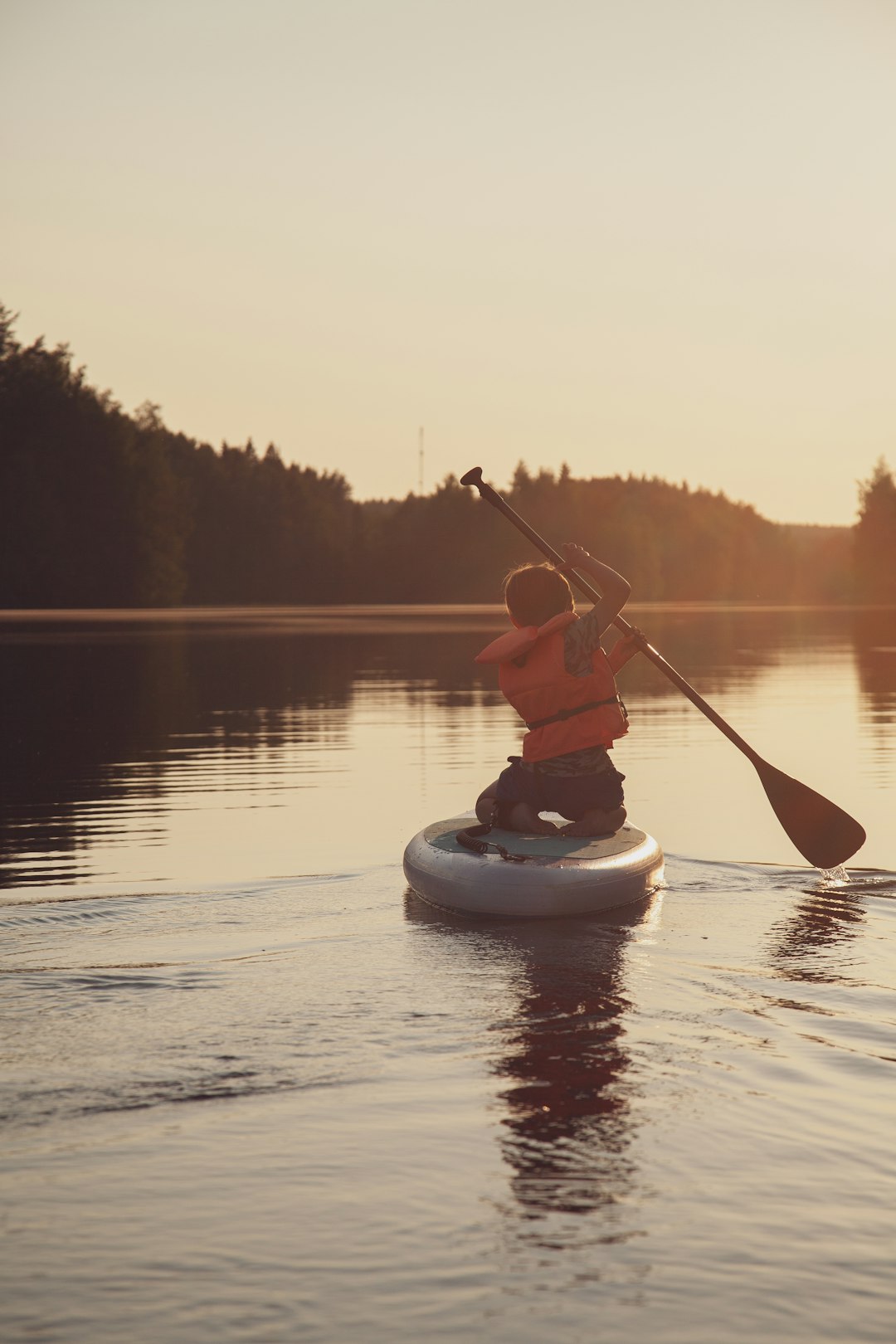
The Best Paddle Boards for Beginners in 2026: A Complete Buyer’s Guide
Stepping onto a stand-up paddle board (SUP) for the first time is an exhilarating experience. The water is calm, the sun is shining, and you’re ready to glide. But if you’re standing on the wrong board, that serene vision can quickly turn into a frustrating cycle of falling and splashing. Finding the best paddle boards for beginners in 2026 is the crucial first step to ensuring your time on the water is filled with enjoyment rather than exhaustion.
While Kayakopedia is rooted in all things kayaking—and we certainly love our kayak guides—many paddlers enjoy crossing over into the world of SUP. Stand-up paddle boarding offers a fantastic core workout, a unique vantage point of the water, and an unmatched sense of freedom. Plus, many paddling tips translate beautifully between the two sports.
In this comprehensive guide, we will break down exactly what makes a paddle board great for beginners, highlight our top picks for 2026, and share essential beginner kayaking and paddling tips to help you find your sea legs faster.
What Makes a Paddle Board Good for Beginners?
When evaluating the best paddle boards for beginners, stability is king. A beginner-friendly board should feel like a solid platform, forgiving your initial wobbles and missteps. Here are the three primary factors to consider:
1. Width
The wider the board, the more stable it will be. For most beginners, a width of 32 to 34 inches is the sweet spot. Anything narrower will feel tippy and require advanced balance, while anything significantly wider can become sluggish and difficult to paddle efficiently.
2. Volume and Weight Capacity
Volume (measured in liters) determines how much weight the board can support while remaining buoyant and stable. A board with higher volume will sit higher on the water, creating less drag and feeling much more secure underfoot. Always check the manufacturer’s suggested weight capacity and aim for a board that comfortably exceeds your weight, plus any gear you plan to bring.
3. Hull Type: Planing vs. Displacement
For beginners, a planing hull is almost always the right choice. These boards have a flat, wide bottom and a rounded nose (similar to a surfboard). They are designed to ride on top of the water, making them incredibly stable and versatile for flatwater, small waves, and general recreational use.
Conversely, displacement hulls have a pointed nose designed to slice through the water. While they are faster and track straighter, they are generally narrower and much tippier—better suited for touring or racing.
Inflatable vs. Solid (Hard) Paddle Boards
One of the biggest decisions you’ll make in 2026 is whether to buy an inflatable SUP (iSUP) or a solid, rigid board. Over the last few years, drop-stitch technology has advanced dramatically, making inflatable boards incredibly rigid and durable.
Inflatable SUPs (iSUPs)
Pros:
- Storage and Transport: They deflate and roll up into a backpack. You don’t need a roof rack or a large garage.
- Durability: High-quality iSUPs are made from military-grade PVC. They bounce off rocks and docks, making them virtually indestructible for beginners.
- Softer Landings: When (not if) you fall, falling on an air-filled PVC board hurts significantly less than falling on a fiberglass surface.
Cons:
- Setup Time: Pumping them up takes 5-10 minutes of manual labor (unless you invest in an electric pump).
- Performance: While rigid, they still lack the ultimate stiffness and glide of a hard board, particularly in windy or choppy conditions.
Solid Paddle Boards
Pros:
- Performance: Hard boards offer superior glide, speed, and tracking. They cut through chop more efficiently.
- Grab and Go: No inflation required. Just strap it to your car, unstrap it at the beach, and go.
Cons:
- Storage: You need a garage, shed, or dedicated wall space.
- Fragility: Fiberglass and epoxy can chip or crack if dropped or bumped against rocks.
For 90% of beginners, an inflatable paddle board is the recommended starting point due to its convenience, durability, and forgiving nature.
Top 5 Best Paddle Boards for Beginners in 2026
Based on stability, build quality, included accessories, and overall value, here are the top paddle boards leading the pack for beginners this year.
1. iROCKER Cruiser 10’6” (Best Overall for Stability)
The iROCKER Cruiser remains a titan in the beginner space. At 33 inches wide with an extra-wide tail, it provides a remarkably stable platform that makes standing up feel effortless.
- Why it’s great for beginners: The wide tail drastically reduces side-to-side roll. It also comes with a premium carbon-blend paddle and a highly efficient dual-chamber hand pump.
- Ideal for: Paddlers who prioritize stability above all else and want a board that will last for years.
2. Bluefin Cruise 10’8” (Best Value Package)
If you’re looking for a board that gives you everything you need (and more) right out of the box, the Bluefin Cruise is hard to beat. It features exceptional rigidity thanks to dense drop-stitch construction.
- Why it’s great for beginners: It includes a kayak conversion kit (seat and extra paddle blade). If you get tired of standing, you can sit down and paddle it like a kayak—perfect for those transitioning from kayaking!
- Ideal for: Budget-conscious buyers who want the versatility of both a SUP and a kayak experience.
3. BOTE Flood Aero 11’ (Best for Larger Paddlers & Families)
BOTE is known for its incredible aesthetics and clever features. The Flood Aero is a high-volume board that can comfortably support heavier paddlers, or a paddler plus a dog or child.
- Why it’s great for beginners: It’s incredibly buoyant and features BOTE’s MAGNEPOD system (a magnetic drink holder) and plenty of tie-down points for gear.
- Ideal for: Larger paddlers, family days at the lake, and those who want to pack a cooler for the day.
4. Isle Pioneer 2.0 (Best Lightweight Option)
Carrying a 25-pound board to the water can be daunting. The Isle Pioneer 2.0 uses lightweight drop-stitch technology, dropping the board’s weight to just 21 lbs without sacrificing durability.
- Why it’s great for beginners: It’s exceptionally easy to carry and maneuver both on and off the water. The wide, rounded nose provides excellent stability in calm waters.
- Ideal for: Smaller paddlers, or anyone who has a long walk from the parking lot to the launch spot.
5. Pelican Anthem 100X (Best Solid Board on a Budget)
If you have the storage space and absolutely prefer a hard board, the Pelican Anthem 100X is a fantastic entry point.
- Why it’s great for beginners: Made from Pelican’s proprietary RAM-X material (similar to their durable kayaks), this board can take a beating. It’s highly impact-resistant compared to traditional fiberglass boards.
- Ideal for: Paddlers living on the water who don’t want to deal with inflation and need a board that can survive rocky shores.
Essential Paddling Tips for Your First Time Out
Having the best paddle board is only half the battle. Knowing how to use it safely and efficiently will make your first experience significantly better.
1. Start on Your Knees
Don’t try to stand up immediately. Wade into knee-deep water, place your paddle across the board, and climb on so your knees are positioned just behind the center handle. Practice paddling from your knees to get a feel for the board’s balance and tracking.
2. Stand Up in One Fluid Motion
When you feel ready, place your hands on the board in front of your knees. Bring one foot up to where your knee was, then the other, keeping your weight low. Slowly stand up, keeping your knees slightly bent. Your feet should be parallel, roughly shoulder-width apart, straddling the center handle.
3. Look at the Horizon
This is the most common mistake beginners make! If you look down at your feet, your head leans forward, throwing off your center of gravity, and you will fall. Keep your eyes up and focused on the horizon or the shoreline. Your body will naturally balance itself.
4. Use Your Core, Not Your Arms
Paddling with just your arms will exhaust you in 15 minutes. A proper paddle stroke engages your core. Reach forward, plant the blade fully into the water, and pull yourself past the paddle by twisting your torso and engaging your abdominal muscles.
5. Hold the Paddle Correctly
The blade of the paddle should angle forward, away from you. It seems counterintuitive, but this allows the blade to catch the water smoothly and lift the board slightly, rather than pushing water up and creating drag. Also, ensure your hands are spaced properly: one hand on the top T-grip, and the other about shoulder-width down the shaft.
Safety Gear You Can’t Ignore
No matter how calm the water looks, safety should always be your top priority.
- Personal Flotation Device (PFD): You must wear a Coast Guard-approved life jacket. If you find traditional vests bulky, look into inflatable belt packs, which are popular and legal for adult SUP riders.
- The Leash: This is arguably your most important piece of safety gear. A leash attaches your ankle or calf to the board. If you fall off, the wind can blow a lightweight SUP away from you faster than you can swim. Your board is a giant flotation device—stay tethered to it.
- Sun Protection: The sun reflects off the water, increasing your UV exposure. Wear a rash guard, a wide-brimmed hat, and plenty of waterproof sunscreen.
SUP vs. Kayaking: Which is Right for You?
Since you’re on Kayakopedia, you might be wondering whether to invest in a kayak or a SUP. Both offer incredible ways to explore the water, but they cater to slightly different experiences.
If you prioritize speed, covering long distances, navigating moving water (like rivers), or carrying a lot of camping gear, a kayak is typically the better choice. If you prefer a full-body core workout, the ability to easily jump on and off for a swim, and an elevated view of the water (great for spotting fish or wildlife), a paddle board is unparalleled.
Many paddlers ultimately end up owning both! If you’re currently a kayaker looking to try SUP, your understanding of water reading, weather conditions, and basic paddle strokes will give you a massive head start.
Conclusion
Choosing the best paddle board for beginners in 2026 comes down to maximizing stability and ease of use. By opting for a wider board (32-34 inches) with a planing hull—and likely choosing the convenience of an inflatable model—you set yourself up for immediate success.
Remember to take it slow, start on your knees, keep your eyes on the horizon, and always wear your leash and PFD. The water is waiting—grab your paddle and go!