Kayak Safety Checklist: Everything You Need to Inspect Before Hitting the Water
Before you drag your kayak to the water, a quick safety check prevents most preventable paddling accidents. This 7-point pre-launch checklist takes five minutes but builds confidence and muscle memory that serves you every time you paddle. It covers calm-water day trips on lakes, slow rivers, and protected coastal paddling—ideal territory for beginners and intermediate paddlers.
Why a Pre-Launch Kayak Safety Checklist Matters
Recreational paddling incidents happen more often than many beginners realize. Equipment failure, unexpected weather shifts, and paddlers caught unprepared account for a significant share of kayak rescues—and most are avoidable with a consistent check before every launch.
Think of this kayak safety checklist not as paperwork but as a ritual. Like a pilot walking around a plane, you’re building a habit that keeps you safe and sharpens your paddling instincts over time.
1. Personal Flotation Device (PFD) Inspection
Your PFD is the single most important piece of paddling safety gear on the water. No exceptions.
What to check:
- Inspect all straps for fraying, wear, or cracked buckles
- Test every zipper and closure to confirm it operates smoothly
- Look for tears, punctures, or compressed foam that no longer provides buoyancy
- Ensure straps are not stretched or sun-damaged
Fit check: Put the PFD on and tighten all straps. It should fit snugly without riding up over your shoulders when you lift your arms. You should not be able to pull it above your collarbone. A loose PFD can slip off in the water—this is not a style choice, it’s a safety requirement.
Legal reminder: Most states require your PFD to be worn or readily accessible, not buried in a sealed dry hatch. Check your local regulations and always err on the side of wearing it.
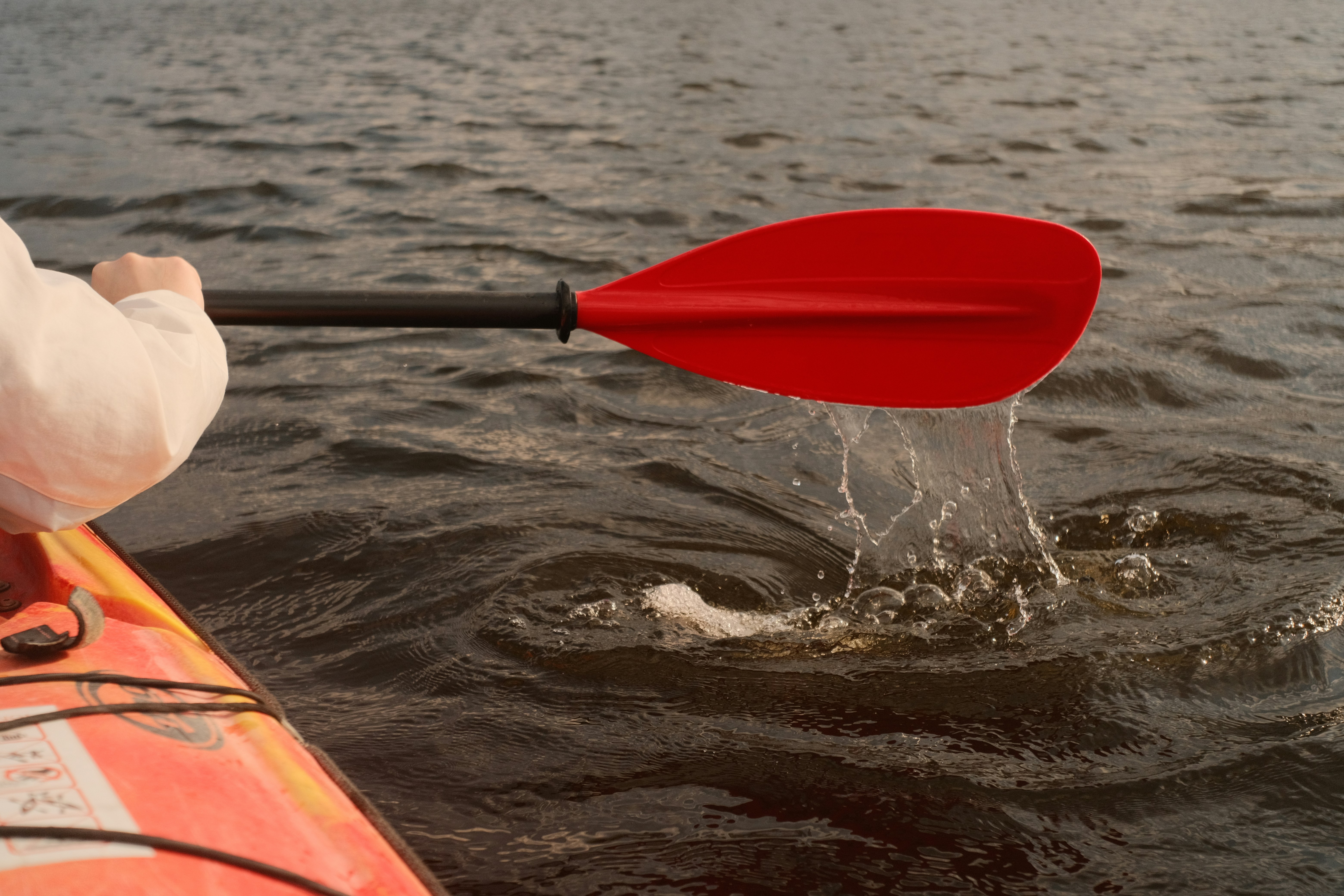
2. Paddle Condition and Fit
A damaged paddle can fail mid-stroke or injure you if a cracked blade splits.
What to check:
- Run your fingers along the entire shaft feeling for cracks, dents, or soft spots indicating delamination
- Inspect blade edges for chips, cracks, or delamination around the blade face
- Confirm the feather angle between blade faces is secure—tighten any adjustable collar if needed
- Verify drip guards are intact and seated properly
Fit check: Hold the paddle overhead at arm’s length. Your elbows should bend roughly 90 degrees. A paddle that’s too long or short reduces efficiency and increases strain on your shoulders.
3. Kayak Hull and Hatches
Your kayak takes you everywhere, but it only works if it’s structurally sound and watertight.
What to check:
- Examine the full hull for cracks, deep dents, or areas that appear to bulge outward—bulging can indicate a laminate failure
- Inspect hatch covers for warping, missing seals, or cracks that prevent a watertight closure
- Test hatch closures to confirm they latch fully
Sit-on-top vs. sit-inside configuration:
- Sit-on-top kayaks have scupper holes that drain water automatically. Verify scuppers are clear of debris.
- Sit-inside kayaks typically use scupper plugs to keep water out. Confirm plugs are installed and seated correctly.
Structural checks: Confirm footpegs, seat adjustments, and any rigging are secure. A loose footpeg mid-paddle is more than annoying—it can compromise your brace.
4. Communication and Signaling Gear
Even on a short paddle, you need to be heard and seen if something goes wrong.
Essential items:
- Whistle: Attach a marine whistle to your PFD. Most states require a whistle for kayakers on federally controlled waters. Look for whistles rated at 75+ decibels for marine use.
- Visual signal: A bright orange kayak flag or paddle float increases visibility to boaters, especially in areas with motor traffic
Consider carrying:
- Waterproof phone case with your emergency contacts and local rescue numbers programmed
- VHF radio for longer coastal or river paddles where cell service is unreliable
- Compact bilge pump or large sponge for self-rescue if water accumulates in your cockpit
5. Weather and Water Conditions
Beautiful mornings can turn windy fast. Always assess conditions before you launch.
What to check:
- Wind: For beginners, paddling in winds above 10–15 mph becomes difficult and tiring. Check sustained wind and gusts.
- Wave height: Small chop is manageable. Whitecaps and waves over 12 inches are challenging for newer paddlers.
- Water temperature: Cold water below 60°F demands a wetsuit or drysuit. Hypothermia risk is real even on sunny days.
- Tide and current: On coastal or tidal rivers, confirm your launch and landing times align with manageable currents. Check tide tables and note the direction of tidal flow.
If conditions feel beyond your current skill level, reschedule rather than push your luck. There is no shame in turning back.
6. Float Plan and Emergency Preparation
If you don’t come back, someone needs to know where to start looking.
Float plan basics:
- Tell a reliable person your exact launch location, planned route, and expected return time
- Set a check-in time with that person—if you don’t call, they call rescue
- Write down the nearest emergency services number before you go
Pre-trip planning:
- Identify two or three emergency exit points along your route where you could pull off the water if conditions deteriorate
- Pack a basic first aid kit including blister treatment—you will use it eventually
- Solo paddlers should strongly consider a paddle leash to keep your paddle attached if you swim
7. Making This Kayak Safety Checklist a Habit
Seven checkpoints stand between you and a safer paddle: PFD, paddle, hull, signaling gear, weather, and float plan. Run through them before every outing, and they become automatic within a few trips.
Practical tips:
- Laminate this pre-launch checklist and keep it in your car or gear bag
- Take a photo of your gear spread out on a towel—use it as a visual reminder until the routine clicks
- Pair this checklist with a beginner kayaking gear guide to build a complete pre-trip routine
Consistent checks transform a chore into confidence. Every time you run through this kayak safety checklist, you’re not just preparing for one paddle—you’re building habits that serve you for a lifetime on the water.
Start your next paddle with intention. Run the checklist. Then go enjoy the water.