You’ve decided to try paddle boarding. Good choice — it’s one of the most accessible ways to get on the water, and once you’re standing and gliding across a calm lake, it’s hard to go back.
But here’s the problem: the market is flooded with boards. Some are fantastic for beginners. Others are overpriced and underperforming. And if you don’t know what you’re looking for, it’s easy to spend $600 on the wrong board.
That’s why we tested 24 boards over six months — inflating, paddling, balancing, and yes, a few splashdowns — to find the ones that actually work for someone just starting out.
In this guide, you’ll find our eight top picks for beginners, broken down by what makes each one special. We’ll also walk you through what actually matters when buying your first board, so you can make a confident decision.
What to Look for in a Beginner Paddle Board: Complete Buyer’s Guide
Before we jump into specific boards, let’s talk about what separates a beginner-friendly board from one that’ll have you frustrated before you reach the water.
Inflatable vs. Hard Paddle Boards: Which is Better for Beginners?
The first decision you’ll face is whether to go with an inflatable or a hard epoxy board. Here’s the honest breakdown:
Inflatable paddle boards (iSUPs) are the most popular choice for beginners, and for good reason. They’re easier to transport, simpler to store, and more forgiving on impact. If you hit a rock or bump into something, an inflatable just bounces. They’re also lighter to carry when deflated. The trade-off is that they require inflation before each use (usually 10–15 minutes with a hand pump) and can feel slightly less rigid underfoot compared to hard boards.
Hard epoxy boards offer better glide efficiency and a more responsive feel in the water. They don’t require inflation. But they’re heavier, harder to transport, and need more storage space. For most beginners, we recommend starting with an inflatable. If you’re curious about how these compare to inflatable kayaks for similar activities, the principles are similar.
Paddle Board Size Chart: Finding the Right Length and Width
For beginners, stability is king. A wider, shorter board is more stable than a narrow, long one — but it won’t glide as efficiently.
What to look for:
- Length: 10’ to 11’6” for most beginners. Shorter boards (under 10’) sacrifice speed and tracking for maneuverability. Longer boards (over 11’6”) track straighter but are harder to turn.
- Width: 30” to 34” wide. Wider boards (32”+) are significantly more stable for standing. Narrower boards (under 30”) are faster but require better balance.
As a beginner, we recommend prioritizing width for stability. You can always upgrade to a faster, narrower board later once you’ve built confidence.
Understanding Paddle Board Volume and Weight Capacity
Volume (measured in liters) determines how much weight a board can support while still floating properly. Higher volume = more buoyancy.
Quick guidelines:
- Under 150 lbs: Look for boards with 200+ liters of volume
- 150–200 lbs: 220–280 liters
- Over 200 lbs: 280+ liters
If you’re close to or over a board’s weight limit, it will sit lower in the water, feel sluggish, and be harder to maneuver. Always check the manufacturer’s weight capacity — it’s listed in the specs for every good board.
Beginner Paddle Board Prices: What to Budget in 2026
Here’s the reality: you don’t need to spend $1,000+ to get a quality beginner board. Most of the best beginner paddle boards fall in the $350–$600 range. Think of it like essential paddling gear — the core equipment matters most when you’re starting.
- Under $300: Entry-level boards that often skimp on accessories, pump quality, or board stiffness. Usable, but expect compromises.
- $300–$500: The sweet spot for beginners. Boards in this range typically include a paddle, pump, carrying bag, and repair kit — and the board itself is stiff enough for solid performance.
- $500–$700: Premium beginner territory. Lighter materials, better accessories, and features that beginners will grow into rather than outgrow.
- $700+: Generally unnecessary for beginners unless you have very specific needs (advanced touring, serious fitness goals).
Paddle Board Fin Setup: Single Fin vs. Thruster
Most beginner boards come with either a single large center fin or a thruster setup (three fins).
- Single fin: Easier to transport, simpler, good for calm water. The trade-off is less tracking stability.
- Thruster (3 fins): Better tracking (the board goes straighter with less effort), more stable at speed. Some beginners find three fins trickier to pack and set up.
For pure beginners on flat water, a single-fin or a removable center-fin system works perfectly fine. If you think you’ll paddle in any wind or want straighter tracking, go with a thruster.
How We Tested the Best Paddle Boards for Beginners
You deserve to know that our recommendations come from actual use, not just spec sheets.
Here’s how we evaluated each board:
Stability Testing: Each board was tested on flat water by paddlers ranging from 130 lbs to 220 lbs. We evaluated how easy it was to stand up, maintain balance while paddling, and transition from sitting to standing.
Tracking & Glide: We paddled each board over a measured 500-meter course, noting how much effort was required to maintain speed and whether the board wanted to go straight or drift.
Inflation & Setup: We timed how long it took to inflate each board to recommended PSI and assessed the quality of the included pump.
Accessories Quality: We evaluated the included paddle (is it adjustable? How’s the blade shape?), carrying bag, leash, and repair kit. A quality paddle makes a huge difference — similar to how paddle materials and shapes affect kayaking performance.
Value Assessment: We compared overall performance to price, factoring in what beginners actually need versus nice-to-have features.
Long-Term Durability: We tracked boards over six months of regular use, noting any delamination, valve issues, or loss of rigidity.
The 8 Best Paddle Boards for Beginners Reviewed
1. Best Overall: Nixy Newport G4
Price: $499 | Type: Inflatable | Length: 10’6” | Width: 32” | Weight Capacity: 275 lbs
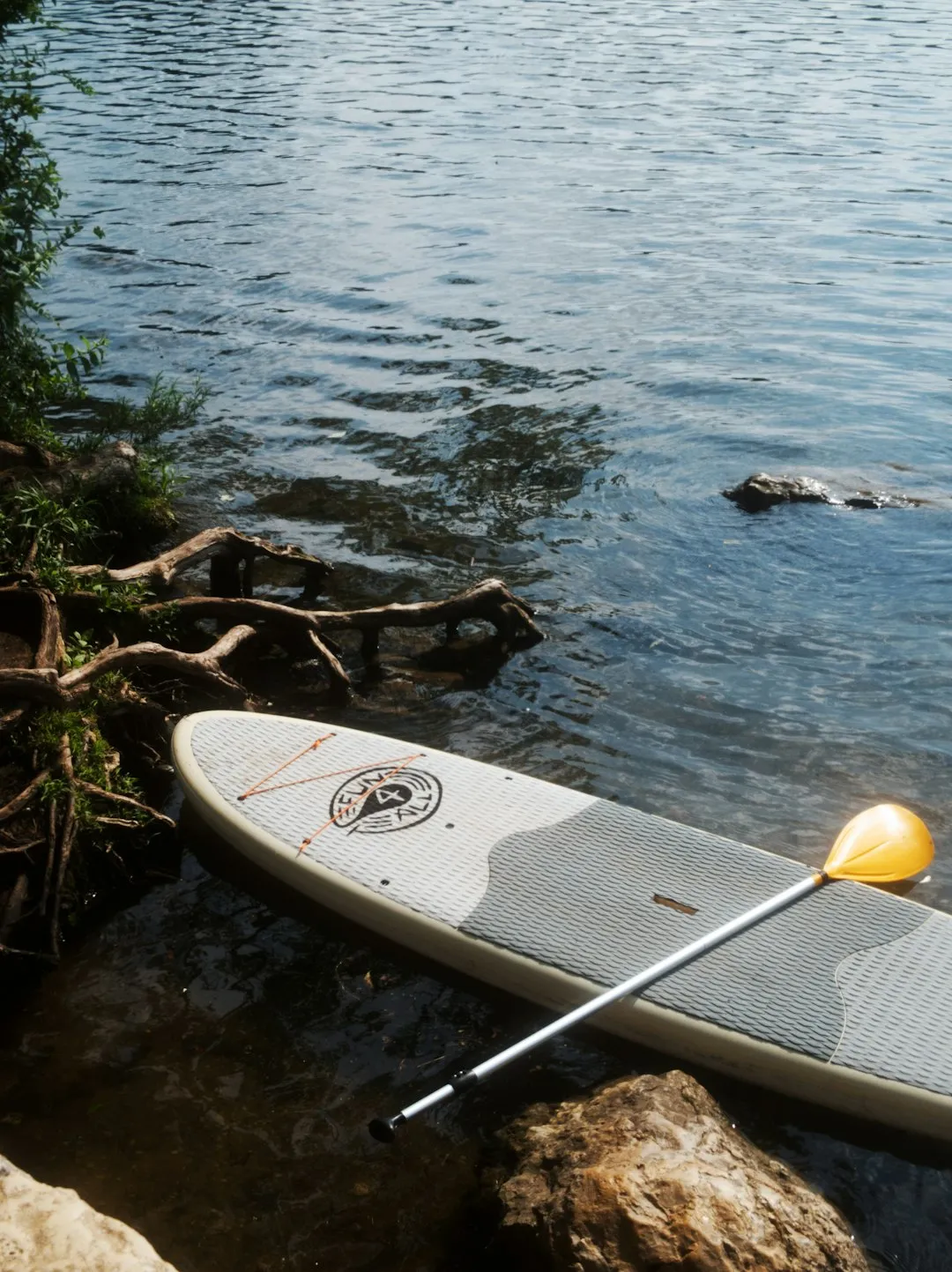
The Nixy Newport G4 strikes the right balance for beginners who want quality without overpaying. At 10’6” long and 32” wide, it’s stable enough to build confidence quickly, but not so wide that it feels sluggish.
Why we picked it: The Newport G4 includes a carbon-fiber shaft paddle (usually a $100+ upgrade), which makes a noticeable difference in paddling efficiency. The board itself is stiff — we didn’t feel flex even at full PSI with a 200-lb paddler standing in the center. The diamond groove traction pad provides solid foot grip, and the four rear bungee cords are handy for securing a dry bag.
Who it’s for: Beginners who want one board that will last. You won’t outgrow this in a season.
Pros:
- Excellent paddle included (carbon shaft, nylon blade)
- Very stable at 32” wide
- Stiff construction — minimal flex under weight
- Quality carrying backpack with padded straps
- Two kayak-style seat attachments included
Cons:
- No paddle holder built into the board
- Inflation valve could be positioned more conveniently
Buy Now: Check Price on Amazon
2. Best Budget Pick: SereneLife Inflatable Stand Up Paddle Board
Price: $299 | Type: Inflatable | Length: 10’ | Width: 30” | Weight Capacity: 250 lbs
Let’s be honest: not everyone wants to spend $500 on a hobby they’re not sure they’ll stick with. If you’re new to paddling and want to test the waters without a big investment, the SereneLife board gets you on the water for under $300.
Why we picked it: For the price, you’re getting a complete kit — board, aluminum paddle, hand pump, carrying bag, and ankle leash. Yes, the paddle is basic (it doesn’t adjust as smoothly as pricier options), and the carrying bag is more backpack-shaped than ergonomic. But as a working board? It floats, it’s stable, and it holds air.
Who it’s for: Casual users, occasional paddlers, or anyone not ready to commit $500+ to the sport.
Pros:
- Lowest price point on our list with a full kit
- Lightweight at 17 lbs — easy for most people to carry
- Multiple color options
- Decent stability for light-to-moderate paddlers
Cons:
- Aluminum paddle is heavier than composite options
- Tends to be slightly softer at 15 PSI than premium boards
- Carrying bag lacks padded straps
- Not ideal for paddlers over 200 lbs
Buy Now: Check Price on Amazon
3. Best for Stability: BOTE Breeze Aero 11’6” Classic
Price: $649 | Type: Inflatable | Length: 11’6” | Width: 34” | Weight Capacity: 350 lbs
If stability is your top priority — maybe you’re new to balance-intensive activities, planning to paddle with a dog, or want extra confidence for yoga poses — the BOTE Breeze Aero is our recommendation.
Why we picked it: At 11’6” long and 34” wide, this board is a tank. It tracks beautifully, barely wobbles, and can support up to 350 lbs. BOTE’s AeroBOTE technology uses overlapping chamber design for rigidity, and it shows. Even with a 230-lb tester standing on the tail, the board didn’t flex noticeably.
Who it’s for: Larger paddlers, those bringing a dog or child on the board, yoga practitioners, or anyone who values absolute stability over speed.
Pros:
- Extra-wide 34” deck for maximum stability
- Outstanding build quality and rigidity
- Magnepod compatible (magnetic drink holder — a nice touch)
- Beautiful design and color options
- BOTE’s customer service is excellent
Cons:
- Heavier than other options at 24 lbs
- Higher price point
- Wider profile makes it slower to accelerate
Buy Now: Check Price on REI
4. Best for Small and Petite Paddlers: ISLE Airsup 10’
Price: $429 | Type: Inflatable | Length: 10’ | Width: 30” | Weight Capacity: 220 lbs
Standard boards are often designed with average-height adults in mind. For paddlers under 5’4” or under 150 lbs, many boards feel oversized, heavy, and harder to control. The ISLE Airsup 10’ is built differently.
Why we picked it: At 10’ x 30” with a 220-lb weight capacity, this board is scaled for smaller frames. It’s lighter (19 lbs), easier to maneuver, and the narrower width isn’t a problem when your base is smaller. The reduced length also means it’s more responsive and easier to turn.
Who it’s for: Smaller adults, teenagers, and anyone under 150 lbs who finds standard boards unwieldy.
Pros:
- Proportionally designed for smaller paddlers
- Lightweight and maneuverable
- Good quality accessories included
- Three-year warranty
Cons:
- Weight capacity limits it to lighter paddlers
- Less stable in choppy conditions compared to wider options
- Not ideal for taller paddlers over 5’8”
Buy Now: Check Price on Backcountry
5. Best for Yoga and Fitness: GILI Meno 11’ Paddle Board
Price: $549 | Type: Inflatable | Length: 11’ | Width: 33” | Weight Capacity: 300 lbs
Yoga and fitness paddling have specific requirements: a wide, stable platform, grippy traction pad, and enough length for flow sequences without cramping your practice.
Why we picked it: The GILI Meno delivers on all counts. The extra-wide 33” deck gives you room to spread your feet for standing poses, and the diamond-groove traction pad keeps you planted during downward dog or warrior sequences. Six attachment rings let you configure bungees and accessories, and the non-slip center pad extends far enough back for kneeling poses.
Who it’s for: Anyone using paddle boarding for yoga, fitness workouts, or stretching on the water. Also a good choice if you want to bring a small child or large dog along.
Pros:
- Excellent traction pad coverage for yoga poses
- Wide and stable without feeling sluggish
- Multiple D-rings for gear and seat attachments
- Pump and paddle are solid quality
Cons:
- Heavier than some competitors at 22 lbs
- At 11’, turning requires more effort than shorter boards
- Price is mid-range but accessories are just okay
Buy Now: Check Price on Amazon
6. Best Touring Option: THRIVE Beach 10’6”
Price: $599 | Type: Inflatable | Length: 10’6” | Width: 31” | Weight Capacity: 280 lbs
“Touring” boards are designed for covering distance efficiently — straight tracking, good glide, and enough speed to make longer paddles enjoyable. The THRIVE Beach strikes a balance between touring performance and beginner-friendliness.
Why we picked it: This board sits in a sweet spot: long enough to track well and glide efficiently, but not so long that it’s unwieldy for a beginner. The pointed nose shape cuts through water better than rounded-nose recreational boards, and the center fin provides good straight-line tracking. At 31” wide, it’s stable but faster than wider options.
Who it’s for: Beginners who know they’ll want to do longer paddles (3+ miles), explore coves, or eventually try overnight camping trips.
Pros:
- Good touring speed without sacrificing stability
- Bungee system for overnight gear
- High-pressure (20 PSI) capacity for rigidity
- Paddle has multiple angle adjustments
Cons:
- Nose shape makes it less ideal for yoga or surfing
- Slightly less stable than pure recreation boards
- Paddle blade could be more ergonomic
Buy Now: Check Price on Backcountry
7. Best Premium Beginner Board: Tahe Beach LTP
Price: $699 | Type: Inflatable | Length: 10’6” | Width: 32” | Weight Capacity: 320 lbs
If you’ve decided paddle boarding is for you and you want the best possible experience from day one, the Tahe Beach LTP (Lightweight Technology) is worth the investment. This French-designed board uses drop-stitch construction with high-density fibers, resulting in a board that’s lighter and stiffer than most competitors.
Why we picked it: At under 18 lbs, the Beach LTP is one of the lightest inflatable boards we tested. That matters when you’re carrying it to the water, inflating it repeatedly, or loading it onto a car rack. The stiffness is exceptional — this board performs like a hard board on flat water. The accessories (paddle, pump, bag) are all premium quality.
Who it’s for: Serious beginners who want the best experience and have the budget to match. Also ideal if you’ll be transporting your board frequently or have physical limitations that make heavier boards difficult.
Pros:
- Extremely lightweight (under 18 lbs)
- Outstanding stiffness — no flex at full PSI
- Premium accessories included (carbon shaft paddle, dual-action pump)
- Beautiful design and construction quality
- Carrying bag has waist strap — much more comfortable than backpack-style
Cons:
- Highest price point on our list
- Some beginners may not need this level of performance
- Less bungee storage than competitors
Buy Now: Check Price on REI
8. Best All-Around Inflatable: Atoll 11’ Paddle Board
Price: $499 | Type: Inflatable | Length: 11’ | Width: 32” | Weight Capacity: 330 lbs
The Atoll 11’ is the board we’d recommend to most beginners who want a single board to do everything — flat water cruising, light touring, fishing, yoga, and even small-wave surfing. It’s not the flashiest board, but it does everything well without any significant weaknesses.
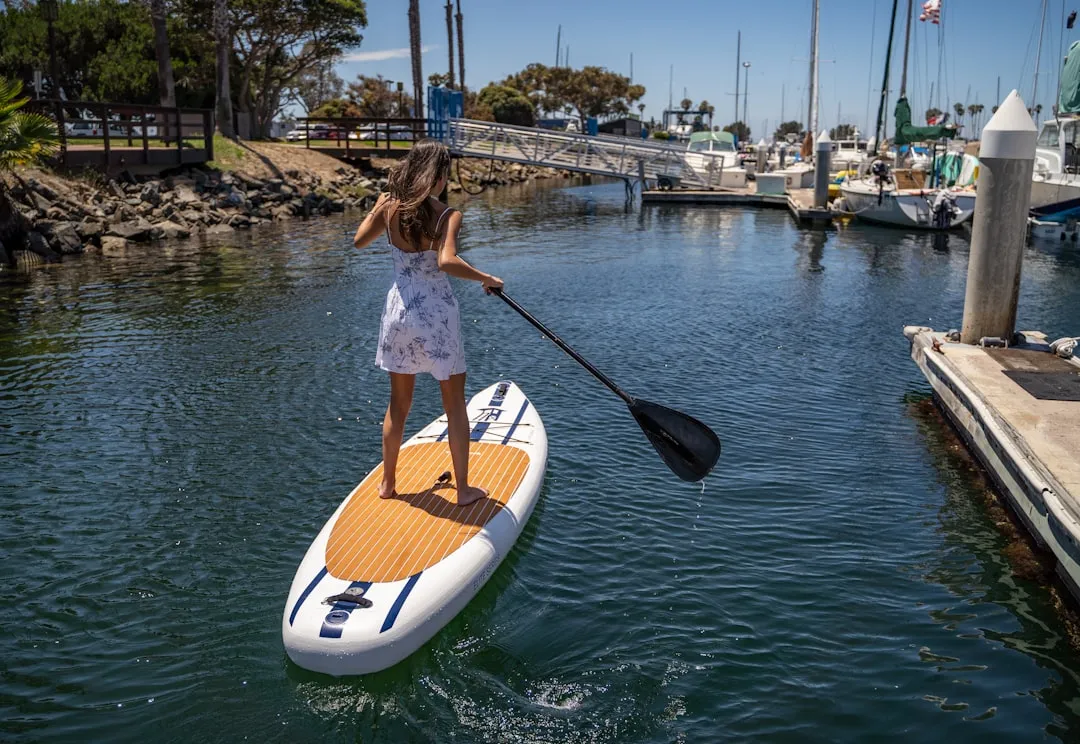
Why we picked it: At 11’ x 32”, you’re getting dimensions that work for most situations. The 330-lb weight capacity handles a wide range of paddler sizes and loads. The US-fin box system lets you swap fins for different conditions. And Atoll’s build quality is consistently solid — we haven’t heard of delamination issues that plague some cheaper brands.
Who it’s for: Beginners who want one board to grow into and don’t want to upgrade in a year.
Pros:
- Excellent weight capacity (330 lbs)
- US-fin compatible — customize for tracking or maneuverability
- Very good build quality and durability
- Paddle and accessories are better than average
Cons:
- Basic design — not the most visually exciting board
- Slightly heavier at 23 lbs
- At 11’, turning isn’t as quick as shorter boards
Buy Now: Check Price on Amazon
Comparison Table: Best Paddle Boards for Beginners
| Board | Type | Length | Width | Weight Capacity | Weight | Price | Best For |
|---|---|---|---|---|---|---|---|
| Nixy Newport G4 | Inflatable | 10'6" | 32" | 275 lbs | 20 lbs | $499 | Best Overall |
| SereneLife | Inflatable | 10' | 30" | 250 lbs | 17 lbs | $299 | Best Budget |
| BOTE Breeze Aero | Inflatable | 11'6" | 34" | 350 lbs | 24 lbs | $649 | Best Stability |
| ISLE Airsup | Inflatable | 10' | 30" | 220 lbs | 19 lbs | $429 | Small Paddlers |
| GILI Meno | Inflatable | 11' | 33" | 300 lbs | 22 lbs | $549 | Yoga & Fitness |
| THRIVE Beach | Inflatable | 10'6" | 31" | 280 lbs | 20 lbs | $599 | Touring |
| Tahe Beach LTP | Inflatable | 10'6" | 32" | 320 lbs | 18 lbs | $699 | Premium Pick |
| Atoll 11' | Inflatable | 11' | 32" | 330 lbs | 23 lbs | $499 | Best All-Around |
Essential Paddle Board Accessories for Beginners
Your board is the core purchase, but a few accessories will make your experience safer, more enjoyable, and more convenient.
Choosing the Right Paddle Board Paddle
Most beginner boards come with an adjustable paddle. Adjustable is the right choice for beginners — it lets you fine-tune length and works for multiple users.
What to look for:
- Shaft material: Aluminum (cheapest, heaviest), fiberglass (mid-range, lighter), carbon fiber (lightest, most expensive)
- Blade shape: Wider blades provide more power per stroke but fatigue faster. Narrow blades are more efficient for distance.
Why You Always Need a Paddle Board Leash
A leash tethers you to your board. If you fall, your board doesn’t drift away. In any current or wind, a board without a leash can be gone in seconds.
Always use your leash. Yes, even in calm water. Yes, even if you’re a strong swimmer.
Coiled leashes (rather than straight) are better for flat water because they’re less likely to drag in the water and tangle around your legs.
Pump Options: Hand vs. Electric
Most boards come with a hand pump. Dual-action pumps (which inflate on both up and down strokes) are faster than single-action pumps. High-pressure pumps with a pressure gauge help you hit the right PSI consistently.
Electric pumps are a worthwhile upgrade if you’ll be inflating frequently. They connect to your car battery or portable power station and fill the board automatically. Budget around $40–$80 for a decent electric pump.
Personal Flotation Device (PFD) Requirements
In most U.S. states, you’re legally required to carry a PFD on the water. In many states, wearing one is required for paddle boarders. According to the U.S. Coast Guard’s regulations for PFDs on paddle sports, paddlers are considered operators of vessels and must have appropriate flotation available. We recommend wearing one — not just having it on the board. Check out our kayak safety checklist for more water safety tips that apply equally to paddle boarding.
For paddle boarding, we recommend:
- Type III PFD: A vest-style life jacket that’s comfortable to wear while paddling
- Inflatable PFD: A belt-pack or vest that inflates on-demand (Coast Guard approved for kayaking/paddle boarding use)
Check your local regulations — paddle board specific laws vary significantly by state.
Where to Paddle: Best Destinations for Beginners
Once you have your gear sorted, you’ll want to find the right place to paddle. Calm, flat water is essential for learning. If you’re looking for inspiration, check out our guide to family-friendly paddling destinations — these same lakes and calm rivers work perfectly for paddle boarding, and many offer board rentals if you want to try before you buy.
For those interested in combining paddling with wildlife watching, our best kayaking destinations for wildlife viewing also apply to paddle boarders. Lakes and calm coastal areas where you’re likely to spot birds, turtles, and even manatees are ideal.
How to Care for and Maintain Your Paddle Board
A well-maintained paddle board will last for years. Here’s what you need to know.
Inflatable Paddle Board Care: After Each Use
After each use:
- Rinse with fresh water, especially after saltwater use
- Wipe down the valve area to prevent sand buildup
- Dry completely before packing (or at least wipe dry)
- Check for any visible damage or soft spots
Storage:
- Keep partially inflated or fully deflated in a temperature-controlled space
- Avoid prolonged sun exposure when stored
- Don’t store weighted down or compressed
Hard Epoxy Paddle Board Maintenance
After each use:
- Rinse with fresh water
- Check for dings, cracks, or delamination
- Wax the deck if used for surfing (prevents slipping)
- Inspect fins for damage
Storage:
- Keep out of direct sunlight when not in use
- Store on padded racks or hanging from wall straps
- Don’t lean on rails — can cause pressure dings
Where to Store Your Paddle Board
The biggest mistake beginners make? Storing their board flat under a pile of gear. That’s how you get pressure dings, valve damage, and shortened lifespan. For more detailed storage advice, check out our year-round kayak storage and maintenance guide — the principles for protecting inflatable water sports equipment are similar.
Store boards on their side or suspended horizontally. If you must stack multiple boards, place foam padding between them.
How Long Do Inflatable Paddle Boards Last?
With proper care, a quality inflatable paddle board should last 5–10 years. Signs it’s time to replace your board include:
- Visible delamination (layers separating)
- Soft spots that don’t inflate properly
- Cracking or peeling at seams
- Valve leaks that won’t seal
Budget boards may show wear sooner, which is another reason we recommend investing in quality from the start. You can learn more about choosing quality gear in our comparison of inflatable vs. hard shell kayaks, which highlights similar quality considerations for inflatables.
Paddle Board FAQ: Common Questions Answered
What is the best paddle board for a beginner under $400?
The SereneLife Inflatable Stand Up Paddle Board is our top pick under $400. It doesn’t have the stiffness or accessory quality of pricier boards, but it gets you on the water without breaking the bank. If you can stretch to $430, the ISLE Airsup offers better build quality and a three-year warranty.
Can beginners use hard epoxy boards?
Yes, but they’re generally not recommended for first-time buyers. Hard boards are heavier, harder to transport, and less forgiving of impacts. If you have specific reasons for wanting a hard board (surfing, club racing, storage space for a wall-mounted rack), they work fine for beginners — but most people should start with an inflatable. Check out our full paddle boarding for beginners guide for more tips on getting started.
How much PSI should I inflate my paddle board?
Most inflatable paddle boards recommend 12–15 PSI. Some high-performance boards (like the Tahe Beach LTP) can handle 18–20 PSI for maximum rigidity. Always check the manufacturer’s recommendation — over-inflating can damage seams.
What size paddle board do I need for my weight?
As a general rule:
- Under 150 lbs: 10’–10’6” board, 200+ liters volume
- 150–200 lbs: 10’6”–11’ board, 220–280 liters volume
- Over 200 lbs: 11’ board or longer, 280+ liters volume
Width matters too — wider boards (32”+) are more stable for heavier paddlers.
Is paddle boarding safe for non-swimmers?
We recommend knowing basic swimming ability before paddle boarding. While you’ll spend most of your time standing, falling is inevitable — especially when learning. Even in calm water, you should be comfortable in the water with a PFD. Never paddle alone, and always wear a properly fitted life jacket. Review our complete kayak safety checklist for essential water safety practices that apply to paddle boarding.
How long does it take to learn paddle boarding?
Most people can stand up and paddle a straight line within 20–30 minutes. Feeling comfortable and confident typically takes 2–3 sessions. Mastering turning, paddling efficiently, and handling choppy conditions usually takes a few months of regular paddling.
Which paddle board is best for a heavy person?
For heavier paddlers over 200 lbs, we recommend the BOTE Breeze Aero (350-lb capacity) or the Atoll 11’ (330-lb capacity). Look for boards with widths of 32” or wider and volumes exceeding 280 liters for the best stability and buoyancy.
Are inflatable paddle boards as good as hard boards?
For most beginners, yes. Modern inflatable paddle boards use drop-stitch technology that creates rigidity approaching hard boards when inflated to proper PSI. The main advantages of hard boards (glide efficiency and responsiveness) matter most for advanced paddlers. For beginners on flat water, a quality inflatable like the Nixy Newport G4 or Tahe Beach LTP performs exceptionally well.
Can I use my kayak paddle on a paddle board?
While technically possible with an adjustable paddle, kayak paddles aren’t ideal for SUP. SUP paddles are designed with a smaller blade and longer shaft to accommodate your upright stance and overhead stroke. Using a kayak paddle can lead to shoulder strain. If you’re interested in both sports, check out our guide on how to start paddleboarding to learn proper technique.
Should I take a lesson before buying a board?
We strongly recommend it. The American Canoe Association offers SUP instruction through certified providers nationwide. A lesson will teach you proper stance, stroke technique, and water safety before you invest in gear. Many paddle board rental shops also offer brief instruction included in the rental price.
Final Thoughts: Your First Paddle Board
Here’s the truth: the “best” paddle board for a beginner is the one you’ll actually use.
A $700 premium board sitting in your garage because it’s too much hassle to inflate and transport is worse than a $300 board that you grab every weekend.
That said, the boards on this list represent genuine quality. If you want our single recommendation: the Nixy Newport G4 is the best all-around choice. It’s not the cheapest, not the most premium, but it delivers the right balance of performance, included accessories, and value that most beginners need.
Whatever you choose, start small. Get comfortable standing and paddling on flat water before you chase wind or waves. Wear your PFD. And remember — everyone falls in. The goal isn’t to look graceful. It’s to enjoy being on the water.
Ready to explore more? Our best kayaks for beginners guide has similar recommendations for those considering kayaking as an alternative or complement to paddle boarding.
Now get out there.
Kayakopedia participates in affiliate programs. If you click a link and make a purchase, we may earn a small commission at no extra cost to you. This never influences our recommendations — we only suggest gear we’d actually paddle with.