The Story of the Kayak: 4,000 Years on the Water
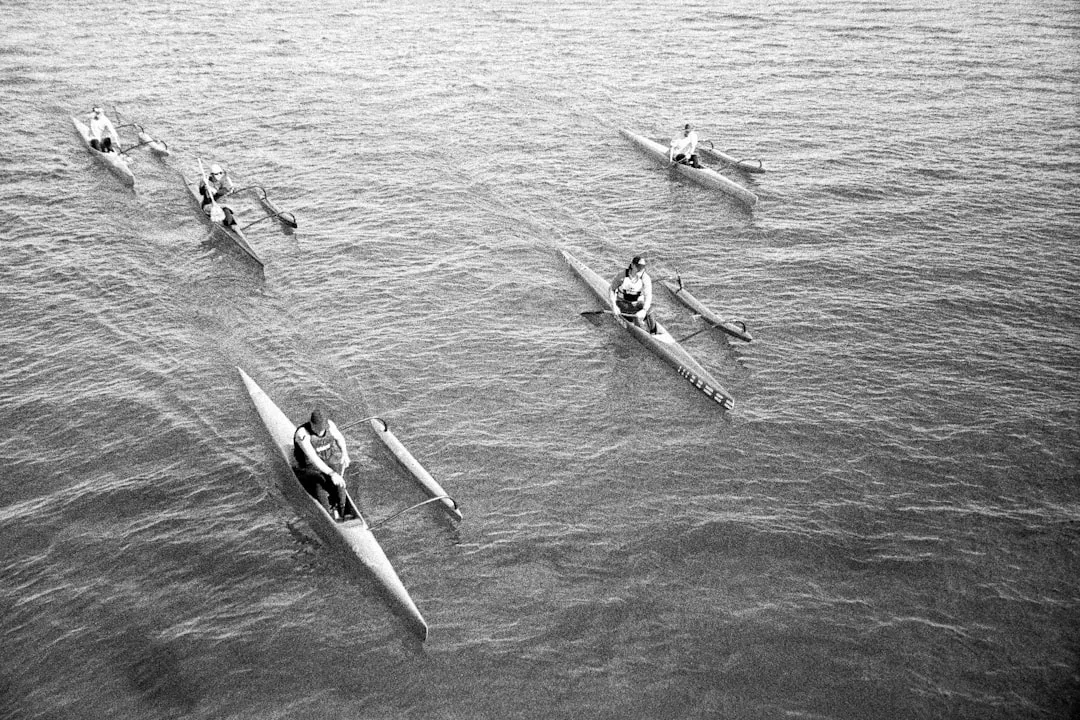
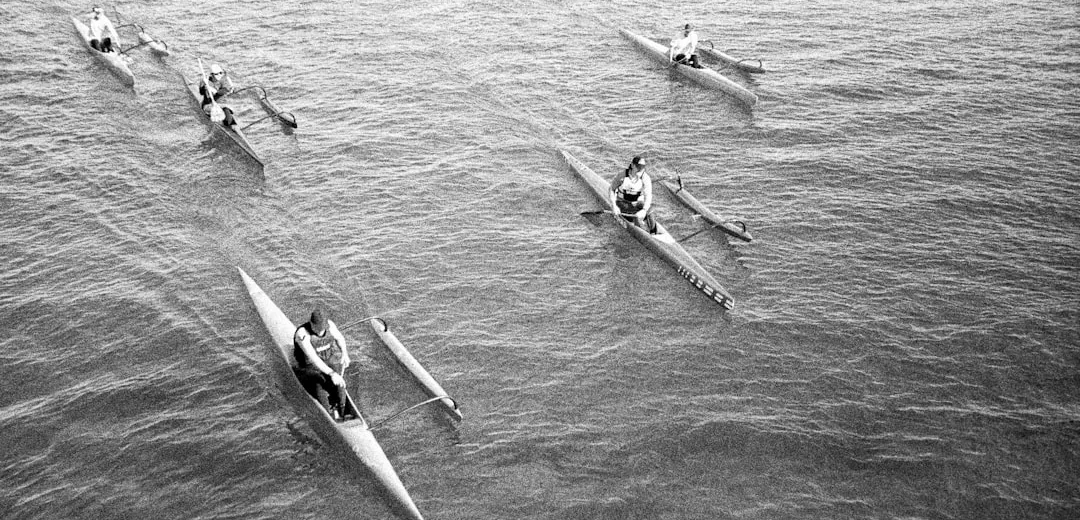
The word kayak comes from the Greenlandic Inuit word qajaq — meaning “hunter’s boat.” That name tells you everything about what the kayak originally was: not a recreation vessel, not a racing craft, but a precision hunting tool built for survival in one of the harshest environments on Earth.
Today, kayaking draws tens of millions of participants worldwide, spans Olympic disciplines, and ranges from kids’ day-camp rentals to 2,000-mile expedition routes through Alaska. That transformation from a sealskin survival craft to a globally enjoyed sport took roughly 4,000 years — and it’s a story worth knowing.
The Origins: Inuit, Yupik, and Aleut Paddlers of the Arctic
The earliest kayaks were developed independently across several Indigenous Arctic and sub-Arctic cultures — primarily the Inuit (northern Canada, Alaska, and Greenland), the Yupik (western Alaska and Siberia), and the Aleut (the Aleutian Islands). Each group created kayak designs suited to their specific waters and prey.
These were not interchangeable crafts. The differences were deliberate:
- Greenland-style kayaks (Inuit): Long, narrow, low-volume, and exceptionally fast. Designed for open-water seal hunting where speed and stealth mattered more than stability.
- Baidarka (Aleut): Multi-piece bifurcated bow, often built with a second or third cockpit for passengers or cargo. The Aleuts were arguably the most sophisticated kayak builders of the ancient world — their designs are still studied by naval architects today.
- Yupik kayaks: Slightly wider and more stable than Greenlandic designs, adapted for the shallower rivers and coastal waters of western Alaska.
What They Were Made Of
Arctic kayak construction was a feat of engineering with zero margin for error. A leaky kayak meant death.
The frame was typically made from driftwood or whalebone — both scarce in the treeless tundra and valued accordingly. Lashing was done with sinew rather than nails. The skin covering was usually ringed seal or bearded seal hide, stretched and sewn by women using a near-waterproof stitch called a blind stitch, where the needle never pierces all the way through the skin. Whale fat was used to waterproof the seams.
The kayak was custom-built for a specific paddler — sized to their body, proportioned so the paddler could brace and roll without conscious thought. A kayak built for someone else was considered less safe to paddle.
The Greenland Roll: A Survival Technique
One of the most remarkable skills to emerge from this period was the Greenland roll — a technique for righting a capsized kayak using body movement and paddle leverage, without ever exiting the boat. Hunters capsizing in 28°F water had only seconds before incapacitation. The roll wasn’t optional; it was a survival skill learned in childhood.
Dozens of distinct rolling techniques were catalogued by Greenlandic hunters. Today, Greenland rolling competitions are held internationally, and the techniques are considered some of the most elegant and efficient in all of paddling.
Kayaking Reaches Europe: The 1800s Pivot
The kayak’s journey west began with European exploration of the Arctic. Explorers and whalers who encountered Indigenous kayakers in the 18th and 19th centuries brought descriptions — and occasionally actual kayaks — back to Europe.
The pivotal moment came in 1845, when John MacGregor, a Scottish lawyer and adventurer, commissioned a kayak-inspired craft he called Rob Roy and paddled it across rivers and lakes throughout Europe. His subsequent book A Thousand Miles in the Rob Roy Canoe (1866) became a bestseller and sparked enormous public interest in paddle sports.
MacGregor’s “canoe” was really a hybrid — more influenced by the kayak than the open canoe, with a covered deck and double-bladed paddle. He founded the Royal Canoe Club in England in 1866, the first organized paddling club in the world.
By the 1880s and 1890s, kayaking had established itself as a leisure pursuit among the European middle class, particularly in Germany and Austria. Purpose-built recreational kayaks, still made of wood and canvas, were being manufactured and sold commercially for the first time.
The Folding Kayak Revolution: 1905
The next major turning point came in 1905, when a German student named Alfred Heurich invented the first folding kayak — a collapsible frame covered with rubberized canvas that could be broken down into a portable bag. His design was commercialized by Hans Klepper, and the Klepper Faltboot (folding boat) became one of the most influential watercraft designs of the 20th century.
Folding kayaks made the sport accessible to city dwellers who couldn’t transport a rigid boat. By the 1920s, tens of thousands of Germans and Austrians owned folding kayaks. Paddling clubs proliferated. The sport had gone mainstream in Central Europe.
Remarkably, folding kayaks were also used militarily. British and Australian commandos used Klepper-style folding kayaks in World War II for covert operations — including the famous Operation Frankton in 1942, where Royal Marines paddled folding kayaks deep into occupied France to place limpet mines on German ships.
Competitive Kayaking and the Olympics
Organized kayak racing followed the recreational boom. The 1924 Paris Olympics included canoe and kayak demonstrations, but the sport wasn’t officially adopted until the 1936 Berlin Games — where flatwater sprint kayaking made its Olympic debut.
Initial Olympic disciplines included:
- Flatwater sprint (K-1, K-2, K-4 — solo, tandem, four-person kayaks over 500m and 1,000m courses)
- Canoe slalom was introduced at the 1972 Munich Games, dropped, then permanently reinstated at the 1992 Barcelona Games
Today’s Olympic kayaking program includes:
| Discipline | Description |
|---|---|
| Sprint (K-1/K-2/K-4) | Flatwater speed racing over 200m, 500m, or 1,000m |
| Canoe Slalom (K-1) | Technical course through whitewater gates |
| Canoe Marathon | Long-distance racing with portages |
| Kayak Cross | Head-to-head whitewater sprint racing |
The International Canoe Federation (ICF), founded in 1924, governs competitive paddling worldwide and sanctions World Championships in addition to the Olympic program. Visit the ICF website for current competition schedules and results.
Post-War Boom: Fiberglass, Plastic, and Mass Recreation
The material revolution that changed kayaking forever happened between 1950 and 1980.
Fiberglass arrived in the 1950s. Lighter and more rigid than wood or canvas, fiberglass kayaks were dramatically more performant than anything that came before. They also lasted longer and required less maintenance. Sea kayak expeditions that would have been nearly impossible with folding boats became achievable.
Polyethylene plastic changed the economics of the sport. Rotationally-molded plastic kayaks, which became widely available in the 1970s and 1980s, were cheap to manufacture, nearly indestructible, and required almost no maintenance. A kayak that previously cost a week’s wages suddenly cost an afternoon’s wages.
This price drop was the catalyst for mass recreational kayaking. The 1970s saw an explosion of interest in sea kayaking along the British Columbia coast and in Alaska, mirroring what MacGregor had done in 1866 — but this time with thousands of participants. Outfitter guides, paddling schools, and kayak touring companies formed almost overnight.
Whitewater kayaking developed its own parallel track. The shorter, more maneuverable designs suited to river rapids bore little resemblance to sea kayaks — and the technical skills required diverged accordingly. By the late 1970s, whitewater kayaking had its own dedicated design lineage, its own competitive circuit, and its own subculture.
For a practical breakdown of how modern construction materials affect performance and price, see our guide to inflatable vs. hard-shell kayaks.
The Rise of Inflatable Kayaks
Inflatable kayaks occupy a curious place in paddling history. Early inflatable boats were notoriously poor performers — slow, difficult to steer, and prone to damage. For decades, serious paddlers dismissed them.
That changed in the 1990s and 2000s as manufacturing quality improved. Modern inflatable kayaks use multi-layer drop-stitch PVC and welded seams that can withstand significant pressure and impact. High-end inflatables now track and handle well enough for Class III and IV whitewater, and some are used on serious open-water tours.
Their key advantage — packability — mirrors what the Klepper folding kayak offered in 1905: access to the water for people without roof racks, garages, or truck beds. They’ve opened kayaking to a new generation of apartment-dwelling urban paddlers.
Sea Kayaking as Expedition Sport
While recreational kayaking was going mainstream, a smaller cohort of paddlers was pushing the limits of what was possible in a kayak over long distances.
Notable expeditions that defined the modern era of sea kayaking:
- 1971: Paul Caffyn begins a series of circumnavigation paddles that will eventually include New Zealand, Australia, Japan, and Britain — some of the longest coastal kayak routes ever completed
- 1980: Hannes Lindemann’s Atlantic crossing (the first solo kayak crossing) is re-examined and documented in detail
- 1980s–1990s: Nigel Foster, John Dowd, and others publish influential instructional books that formalize sea kayaking technique and safety standards
- 2009–2010: Sarah Outen completes a solo kayak crossing of the North Pacific — 4,000 miles from Japan to Alaska
These expeditions shaped the equipment, training methodology, and safety culture of sea kayaking as it exists today. The American Canoe Association has been instrumental in standardizing instruction and certification for sea kayaking in the United States since the 1880s.
Kayaking Today: Disciplines, Technology, and Global Reach
Modern kayaking has fragmented into distinct disciplines, each with specialized equipment and technique:
| Discipline | Typical Kayak | Key Skill |
|---|---|---|
| Recreational | Wide, stable sit-inside or sit-on-top | Basic paddling, stability |
| Sea/Touring | Long, narrow, high-volume | Navigation, rough water technique |
| Whitewater | Short, highly rockered | Edging, rolling, reading water |
| Fishing | Wide, stable, with rod holders | Stealth, rigging |
| Racing | Ultra-narrow, low-profile | Sprint technique, power |
| Surf | Short, maneuverable | Wave reading, dynamic balance |
Pedal kayaks — driven by foot pedals rather than a paddle — have grown significantly in popularity since the early 2000s, particularly among anglers who want hands-free operation for casting. Electric-assist kayaks are an emerging category, though they remain niche.
The sport’s global participation numbers tell the growth story clearly. According to the Outdoor Foundation’s participation data, kayaking consistently ranks among the top 10 outdoor activities in the United States, with over 10 million participants annually.
If you’re just getting started, our beginner’s checklist covers everything you need before your first paddle. For gear recommendations, the 10 essential kayaking items and our safety checklist are good starting points.
A Condensed Timeline of Kayaking History
| Period | Milestone |
|---|---|
| ~4,000 BCE | Inuit, Yupik, and Aleut peoples develop skin-on-frame kayaks for Arctic hunting |
| 18th century | European explorers encounter and document Indigenous kayaks |
| 1845 | John MacGregor paddles Rob Roy across Europe; first canoe club founded |
| 1866 | Royal Canoe Club established in England |
| 1905 | Alfred Heurich invents the folding kayak; Hans Klepper commercializes it |
| 1924 | International Canoe Federation (ICF) founded |
| 1936 | Kayaking debuts as an Olympic sport in Berlin |
| 1940s | Folding kayaks used in WWII commando operations |
| 1950s | Fiberglass kayaks transform performance and durability |
| 1970s | Polyethylene kayaks make the sport affordable to the masses; sea kayaking boom |
| 1972 | Canoe slalom added to the Munich Olympics |
| 1990s–2000s | Inflatable kayak technology matures; fishing kayaks become a major category |
| 2000s | Pedal-drive kayaks gain commercial traction |
| Today | 10M+ annual U.S. participants; Olympic program includes sprint, slalom, and kayak cross |
What the Kayak’s History Tells Us
Every significant development in kayaking history was driven by a practical problem. The Inuit built narrow, fast kayaks because seal hunting required stealth and speed. Europeans built folding kayaks because city apartments don’t have garages. Manufacturers switched to plastic because fiberglass was too expensive for average families.
The kayak has always adapted to the people using it — which is why it’s spent 4,000 years surviving and thriving. If you want to understand why modern kayaks look and behave the way they do, this history is the answer.
For a look at how today’s kayak types differ in practice, our comparison of sea kayaking vs. lake kayaking is a good next read. And if the Greenland rolling tradition caught your attention, our step-by-step kayak roll guide is worth bookmarking.