
The height and weight of a kayaker should be considered when choosing the right kayak. These factors can affect the paddler’s experience and performance on the water. Finding a kayak that fits the body type and physical abilities of the paddler is important, especially for beginners who may not be familiar with how a kayak’s dimensions impact control and comfort. Types of kayaks differ with body types, weight limits, and the kind of paddling you plan to do—whether it’s sea kayaking, lake paddling, fishing, or whitewater. For a comprehensive overview of the different styles, see our guide on sea kayaking vs lake kayaking. If you’re preparing for your first trip, a pre‑trip checklist can help you start safely.

Height Considerations
When it comes to kayaking, there are various factors to consider, such as the type of kayak, weight limits, and physical space. However, one of the most overlooked factors is height considerations. In this section, we’ll discuss how height plays a role in kayaking and why it’s important to choose the right size of kayak. If you’re just starting out, check out our 10 best beginner kayaking destinations in the United States to practice in a safe environment.
Ideal Kayak Length for Taller People
Taller people have longer legs and may find it difficult to fit comfortably in sit‑in kayaks with smaller cockpits. Therefore, choosing a kayak with a longer length is crucial for them to have enough legroom and avoid numbness or discomfort during longer paddling trips. A kayak with a longer length also offers more cubic feet of space, providing ample room for camping gear or other essentials they may want to bring along. For recommendations on the best kayaks for different body types, check out our best kayaks for beginners. If you’re unsure how to get in and out of a kayak without tipping, our getting in & out guide offers helpful tips.

Importance of Choosing a Kayak with Suitable Weight Limit for Shorter Paddlers
Shorter kayakers may find it difficult to paddle larger or heavier kayaks effectively. The weight of the kayak may be too much for them to handle alone. A rule of thumb is to always consider the ideal weight limit of the kayak as a safety measure. Choosing kayaks of appropriate size and weight limit is essential for shorter paddlers to ensure they can maneuver their vessel with ease and have more control over their movements. For a detailed safety checklist before launch, see our essential kayak safety checklist. Additionally, our cold water immersion kayakers survival guide covers important considerations for paddling in variable conditions.
Cockpit Size and Kayak Volume
Kayakers of all sizes must consider the cockpit size of the kayak—too large or too small a cockpit can cause discomfort. Make sure you have enough room to move your legs and rotate your torso. The kayak’s volume is another important consideration as it determines its buoyancy, which can affect its floatation capabilities in choppy waters. For more details on paddle materials and sizes, read our complete guide to kayak paddles. To learn about how cockpit dimensions affect performance, visit the Cockpit article on Wikipedia.
Conclusion
Choosing the right kayak based on height, weight, and experience level is essential for a safe and enjoyable time on the water. Remember to consider the kayak’s length, weight limit, cockpit size, and volume during the selection process. An informed choice will help you stay comfortable and in control, whether you’re paddling solo or with a group. For further maintenance tips, check out our kayak storage and maintenance guide.

Weight Considerations
When it comes to kayaking, weight considerations are an important factor to keep in mind. The weight of both the kayaker and their gear can impact the overall performance and safety of the kayak. In this article, we’ll take a look at how weight affects kayaking and what factors to consider when choosing a kayak based on weight.
Maximum Weight Capacity
Each kayak has a maximum weight capacity listed, which is the maximum amount of weight it can carry without compromising its integrity or stability. It’s important to consider the weight of not just the kayaker but also the gear they’ll be taking with them on their kayaking adventure. If the total weight is close to or surpasses the maximum capacity, it can affect the kayaker’s safety and the kayak’s performance. To compare hard‑shell versus inflatable options, see our inflatable vs hard‑shell kayaks comparison. For official safety standards, refer to the American Canoe Association.
Body Type
Body type plays a significant role in choosing the right kayak. Taller or larger paddlers may need a kayak with a larger cockpit size, higher volume, or a wider blade on the paddle for better control. On the other hand, smaller paddlers may prefer a shorter kayak for ease of maneuverability. Additionally, body weight should also be taken into account when considering the maximum weight capacity of a kayak. To improve your paddling technique, read our mastering the forward stroke guide. For information on paddle design, see the Paddle Wikipedia entry.

Camping Gear
If planning to go on a camping trip with the kayak, the weight of the gear should be factored in. Extra gear might include camping equipment or fishing gear, which can quickly add up in weight. Kayaks with more significant cubic feet or specialized options like kayak trailers may be needed to transport such gear. For a complete spring‑season checklist, see our spring kayak season prep guide. If you’re planning a family trip, our family kayaking guide has tips for traveling with kids and gear. You might also want to explore wine country kayaking for scenic paddling adventures with cargo space for wine tastings.
The Relationship between Body Type and Paddling Performance
Body type has a significant impact on paddling performance. Height and weight distribution can affect the kayak’s stability and maneuverability, making it important to choose the right type of kayak. Larger paddlers may need a kayak with a higher volume and larger cockpit size, while smaller paddlers may prefer a shorter kayak. Proper technique and form are essential to optimize paddling efficiency, such as using shorter strokes and adjusting the paddle angle. Regardless of body type, focusing on technique can greatly improve overall performance in different kayaking environments. For advanced techniques, consider learning about how to read water for beginners to better understand current and water conditions. For safety guidelines, consult the U.S. Coast Guard Boating Safety page.
How Much Weight Can a Kayak Hold?
When selecting a kayak, it is crucial to consider its maximum weight capacity and determine the appropriate weight limit. Different types of kayaks have varying weight capacities, which can range from 200 – 600 pounds. The weight limit is not just limited to the kayaker’s weight, but it includes any additional gear that may be packed on the kayak. Recreational kayaks have weight limits ranging from 200 – 300 pounds, whereas tandem kayaks can hold up to 600 pounds. Therefore, it is essential to determine the appropriate weight limit of the kayak before taking it on the water to ensure safety. For recommendations on beginner‑friendly models, see our best kayaks for beginners.
Larger Paddlers and Maximum Weight Capacity
When it comes to kayaking, larger paddlers need to pay special attention to the maximum weight capacity of the kayak they choose. It is crucial to consider this factor to ensure stability, performance, and safety while on the water. Some of the best kayaks for larger paddlers include the Wilderness Systems Tarpon 140 (375 lb capacity) and the Perception Pescador Pro 12.0 (375 lb capacity). These kayaks have high weight capacities and larger, more comfortable cockpits that accommodate larger paddlers. For more options, see our best kayaks for beginners guide.
Shorter Kayaks for Larger Paddlers
Shorter kayaks may seem counterintuitive for larger paddlers, but they can offer some significant benefits. These kayaks provide better maneuverability, which can be especially helpful in calm waters or when navigating through tight spaces. Additionally, shorter kayaks tend to be more stable, making them a good option for those who may be less experienced or looking for a more relaxing paddling experience. However, larger paddlers need to find a balance between size and volume. A kayak that is too small may have a lower weight capacity and not be able to accommodate larger gear or people. For a deeper look at the pros and cons of different hull shapes, see our inflatable vs hard‑shell kayaks comparison.
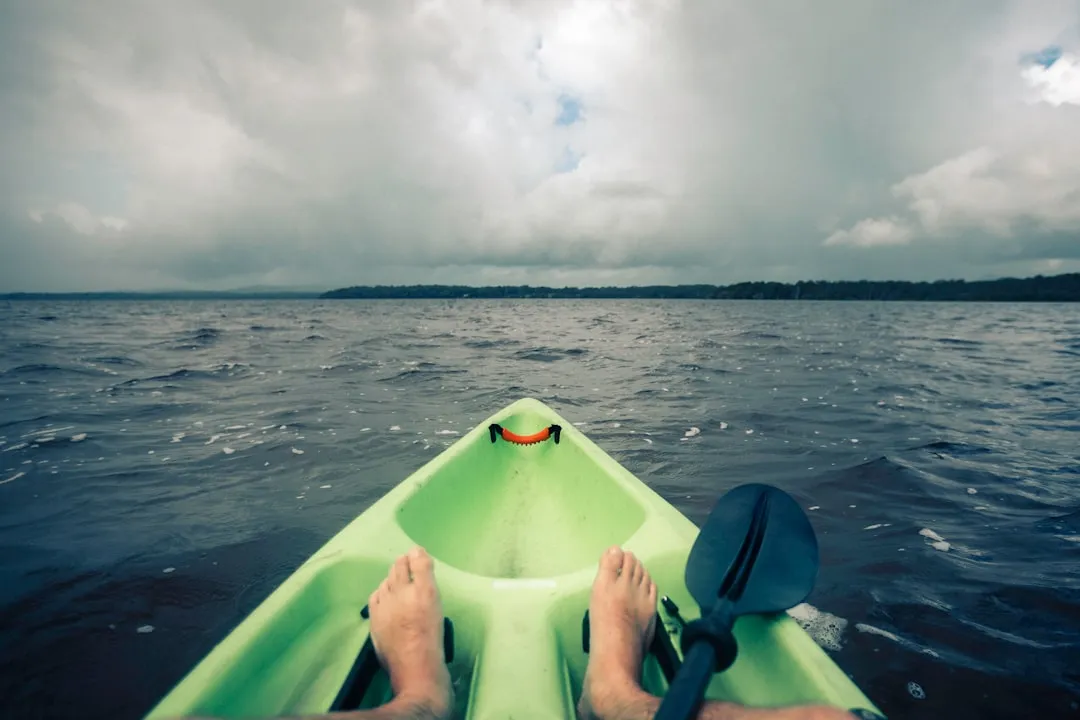
Volume and Weight Limits for Different Types of Kayaks
To choose the right kayak, it’s important to consider weight and volume limits. Here’s a breakdown of various kayak types and their specs:
- Recreational kayaks: Typically have a weight limit of 250 – 300 lb and a volume of 70 – 100 cubic feet.
- Tandem kayaks: Designed for two people and can hold 450 – 600 lb with a volume of 120 – 180 cubic feet.
- Fishing kayaks: Ranges from 250 – 600 lb weight capacity and volume of 60 – 150 cubic feet. Designed to accommodate fishing gear.
- Inflatable kayaks: Can hold up to 500 lb with a volume of 35 – 120 cubic feet. Perfect for those with limited storage space.
- Whitewater kayaks: Have lower weight limits (around 200 lb) and volumes (less than 70 cubic feet) due to their shorter lengths and specialized design.
When choosing a kayak, consider your body type, the type of kayaking you plan to do, and any gear you need to bring. An ill‑fitting kayak can be uncomfortable and unsafe, so be sure to choose one that’s right for you. For fishing-specific considerations, see our kayak fishing for beginners guide. For more information on inflatable options, read our ultimate guide to choosing the right inflatable kayak.
High‑Volume Kayaks for Larger Paddlers
High‑volume kayaks are the perfect fit for larger paddlers as they provide more space and comfort. These kayaks are specially designed to handle more weight capacity while also offering more physical space for paddlers to move around. They can even hold more cargo capacity, making them ideal for overnight trips or kayaking with camping gear. Recreational kayaks, sit‑in kayaks, and sit‑on‑top kayaks are some types of high‑volume kayaks available on the market. If you are a larger paddler, then opting for high‑volume kayaks would be a wise decision to make your kayaking experience comfortable and enjoyable. For maintenance tips, see our kayak storage and maintenance guide.
Inflatable Kayaks and Maximum Weight Capacity
Inflatable kayaks are an excellent option for larger paddlers, with most models having maximum weight capacities of around 400 – 500 pounds. These kayaks can easily accommodate heavier individuals along with their camping gear, making them perfect for longer kayaking trips. In addition, inflatable kayaks come in different types, making them suitable for different body types and skill levels. Recreational kayaks have weight capacities of around 250 – 300 pounds, while tandem kayaks can hold up to 600 pounds. Fishing kayaks also have high weight limits, with some models holding up to 800 pounds. In terms of advantages, inflatable kayaks are easy to store and transport, as they can be deflated and packed into a small bag. They are also more affordable than hard‑shell kayaks and can be easily repaired if damaged. However, they may not perform as well in rough waters and have a lower weight capacity compared to some hard‑shell kayaks. For a comprehensive look at inflatable models, check out our ultimate guide to choosing the right inflatable kayak. To learn more about the science behind buoyancy, see the Kayak article on Wikipedia.
Whether you’re a tall paddler seeking more legroom or a larger kayaker looking for optimal weight capacity, understanding how height and weight interact with kayak design will help you make an informed decision. Remember to test different kayaks when possible, and always prioritize comfort and safety over aesthetics or price. With the right kayak, you’ll enjoy countless hours on the water with improved control, better efficiency, and greater confidence in any paddling environment. For more inspiration, explore our collection of the most majestic and exciting kayaking spots worldwide and discover destinations that suit your skill level and body type.